

By Chris Lang
In June 2016, 50 armed guards from the Kenya Forest Service burned homes belonging to Ogiek indigenous people living in the forests of Chepkitale, Mount Elgon.
The Ogiek have lived in Kenya’s Mau forest for hundreds of years. Some of them live in the deep forest and live from hunting and gathering. The majority grow vegetables and keep livestock.
Since colonial times there have been attempts to evict the Ogiek from their lands. Often the reason given for the evictions is that the Ogiek are degrading the forest.

But once the Ogiek are evicted, their land has been handed over to logging companies and tea plantation operations. Woodland under the control of the Kenya Forest Service has been cleared and hired out to maize farmers. At the same time, large numbers of illegal settlers have moved into the Ogiek’s land. The impacts on the forest have been severe.
The Kenyan government’s “solution” is to evict everyone from the Mau forest, including the Ogiek. The Ogiek are threatened with becoming “conservation refugees”, evicted from their traditional lands in the name of conservation.
A history of evictions
Evictions of Ogiek started in the 1920s under the British colonial government. They were evicted to make way for the “White Highlands”, settlements of Europeans attracted by good soils and the cool climate.
More evictions happened in the 1940s with the creation of forest reserves on Mount Elgon. Evictions continued when Mount Elgon was declared a national park in 1968. Evictions have continued since then, in 1979, 1989, 1996 and 2008.
In 2000, the Chipkitale game reserve was created on Ogiek ancestral land — making the Ogiek’s presence on their land illegal.
In 2011, the Kenya Forest Service, the Kenya Wildlife Service, Mount Elgon Council, the International Union for the Conservation of Nature, and the World Bank visited Ogiek lands to conduct an assessment. They found that the Ogiek’s presence helps to secure the forests and biodiversity.
Against Kenya’s constitution
The latest evictions came as a surprise to the Ogiek. Kenya’s 2010 Constitution recognises anceestral lands and lands traditionally occupied by hunter gatherers as community lands. They are currently negotiating an agreement with the local government aimed at recognising their right to live and carry out their livelihoods on their land.
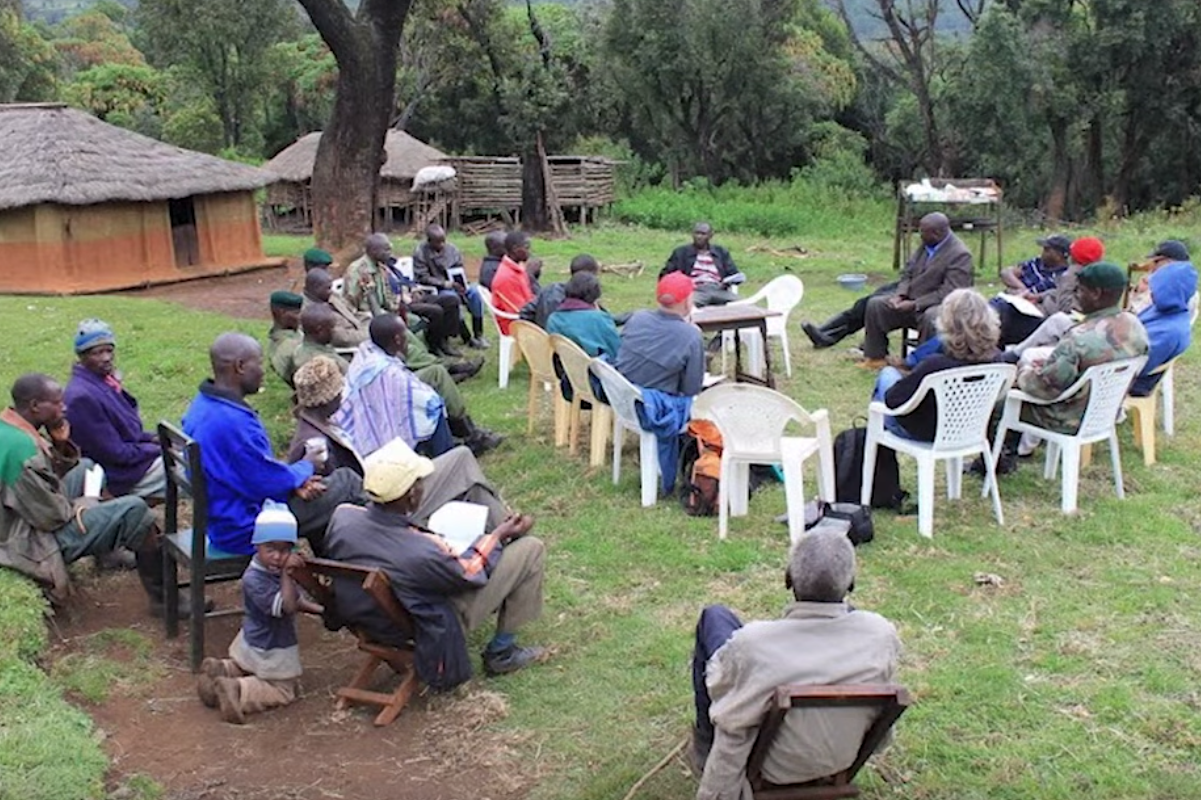
The Ogiek have carried out a community process of mapping and dialogue and written down their customary bylaws. One Ogiek community member explains that,
“We have never conserved. It is the way we live that conserves. These customary bylaws we have had forever, but we have not written them down until now.”
Here’s a Forest Peoples Programme video in which Peter Kitelo, of the Chepkitale Indigenous Peoples’ Development Project, explains the process, the bylaws, and the Ogiek’s views on development and conservation:
The Ogiek’s bylaws document starts with the following words:
“The Ogiek have lived in their ancestral lands, Chepkitale, governed and bound by their traditions being the unwritten law. This is what is captured in this document in the simplest language possible. This is a product of the community, by the community. It has been written with all input coming from the community and agreed on and endorsed by the community. It brings a governance structure relevant to the community today as it has been for centuries.”
Armed guards from the Kenya Forest Service burned 200 homes in the latest evictions of the Ogiek. This year’s rainy season in Kenya is particularly wet. Piter Kitelo reports that evicted families lost their homes, food, and clothing. Small children were forced to live out in the cold.
Kenya Forest Service guards assumed that a partially deaf old man was defying them when he didn’t leave his house after they told him to do so. The guards beat him up.
Kitelo has a simple solution: secure community tenure, not evictions:
Excluding traditional forest dwelling communities from their lands, even if they are given compensation or rights of access, removes the very people who are committed to protecting the forest, and instead opens the forest up for exploitation. Only secure community tenure can give traditional forest dwelling communities the power and commitment to protect their indigenous forests for themselves and the nation over the long term.