
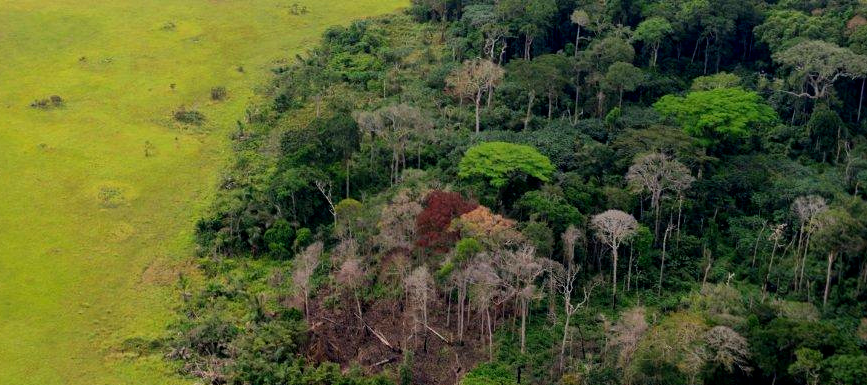
WWF’s largest REDD project in Africa is in Mai Ndombe province, in the Democratic Republic of Congo. According to WWF, the results so far are “very encouraging”. On its website, WWF states that, “The participatory approach through local development committees has proven to be a success with effective achievements.”
Leaders of the Jaminawa indigenous people demand a stop to people speaking on their behalf about REDD in Acre, Brazil
Two weeks ago, REDD-Monitor posted a letter from indigenous peoples in Acre, Brazil announcing their support for the work of the Indigenous Missionary Council (CIMI) in Acre. The letter was part of an on-going discussion in Brazil about REDD in Brazil and its impacts on indigenous peoples.

The Nature Conservancy is wrong. Planting trees is not equivalent to halting the burning of oil
Here we go again. “Plant more trees to combat climate change: scientists” is a Reuters headline from earlier this week. The article is based on a press release put out by The Nature Conservancy about a paper published in the journal Proceedings of the National Academy of Sciences. The paper’s argument relies on the scientific…

WWF responds to REDD-Monitor’s questions about its partnership with logging company Rougier in Cameroon. After only 16 months. The questions are only partially answered. And the answers are woefully inadequate
In June 2016, REDD-Monitor wrote about WWF’s partnership with Rougier, a French logging company, in Cameroon. Survival International had accused WWF of partnering with a company that is logging the forests without the consent of the local indigenous Baka communities. REDD-Monitor followed up some questions to WWF about its partnership with the loggers.

Indigenous peoples in Acre, Brazil announce their support for CIMI’s work in support of indigenous peoples
REDD is at the centre of a tense discussion in Brazil’s indigenous community. Some indigenous people support REDD, others oppose it. Ecosystem Marketplace has jumped into fray, accusing the Indigenous Missionary Council (CIMI) in the state of Acre of “intentionally sabotaging a program that has enabled [indigenous peoples] to save their forests”.